Category Archives: Nicholas’ story

Organ Donation Conferences in Sicily 

Below is the link to the audio recording of my remarks welcoming delegates to Donarte 2023, a conference in Messina, Sicily, that brought together a wide variety of experts on organ transplantation and donation  from around the world. The conference, sparked by the organ donation of my son, Nicholas, who died at the polyclinic in Messina, was the second of a series that began with Donarte 2022.

YouTube link: https://youtu.be/1kwg3twzD3E (please right click with your mouse to open the link in a new window)

A moment from Donarte 2022

A moment from Donarte 2022

The third, Donarte 2024, will be held September 29 to October 1, 2024, also in Messina. For more information  please contact the chief organizer, Dr. Anna Teresa Mazzeo, director of  anesthesia at the University of Messina polyclinic  (annateresamazzeo@unime.it)

Leave a comment

Filed under Events, Italia, Italy, Nicholas' story, Useful tools

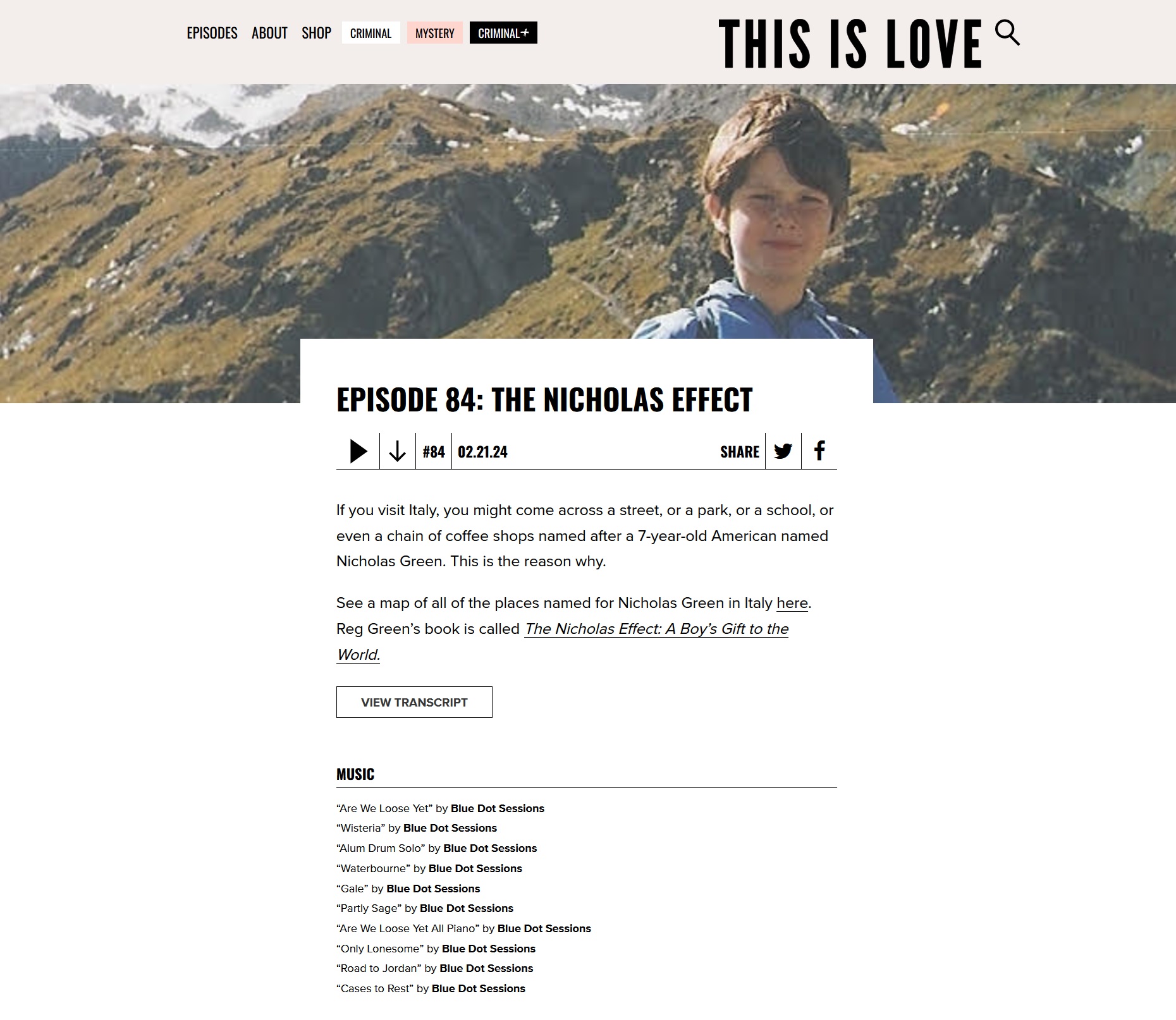
The ‘Nicholas Effect’ in children’s drawings  

 One day recently this email arrived from a stranger: 

“Hello,

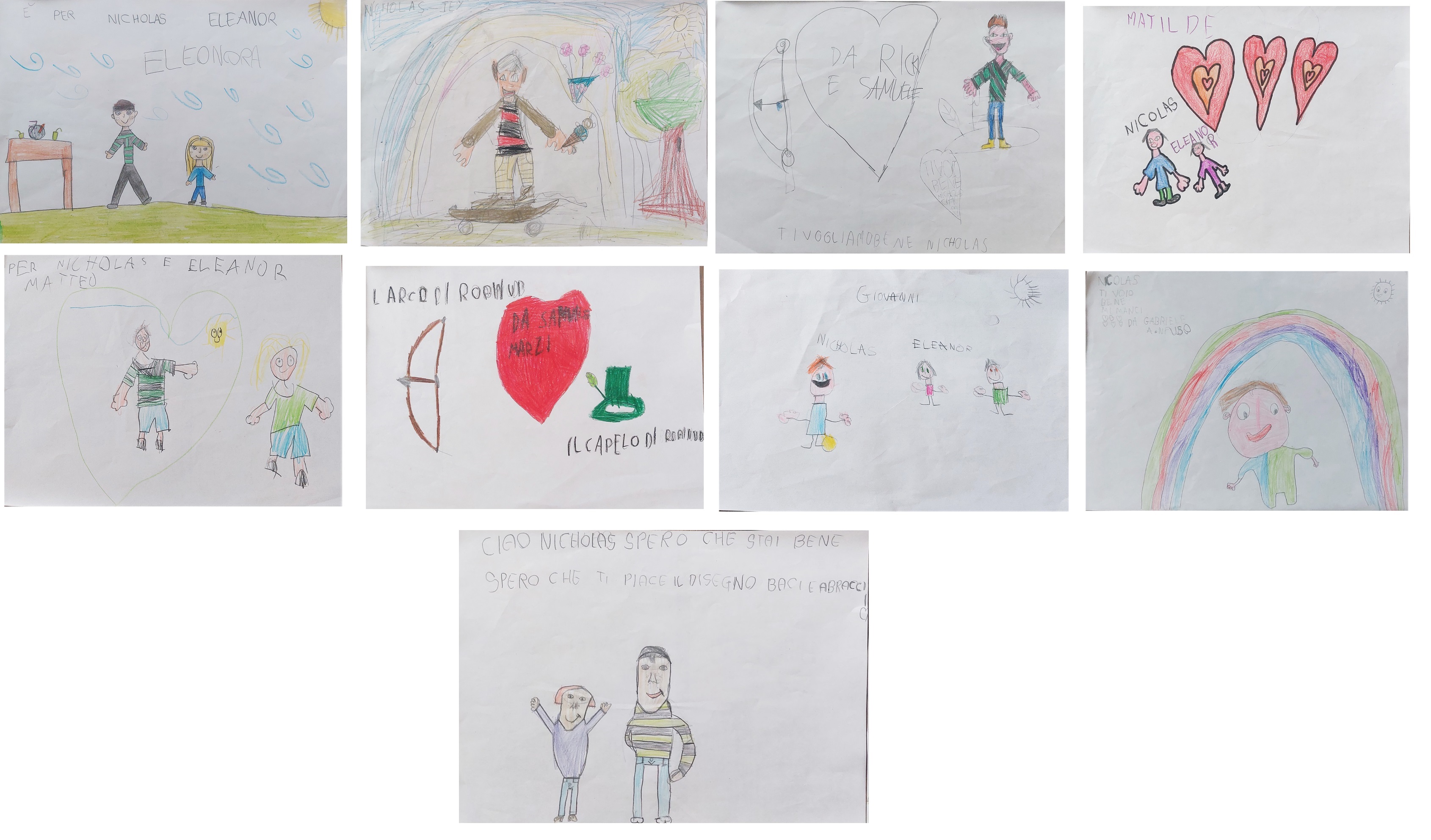
My name is Simone and I’m Italian. I am a teacher in a primary school near Milan. Last Thursday I told Nicholas’ story to my students. They are 7 years old, the same age Nicholas was when he came to Italy.  I showed them the “Nicholas Effect” video and many pictures of Nicholas.  I explained to them that Nicholas is now a new friend of them.  Nicholas is a very special friend, because he is their age (7) but he is also my age: I was born in 1987, too. The children have made me understand that they already love Nicholas. Every child has created a drawing to honor Nicholas’ memory.  I would be happy to photograph the drawings and send them to you via email. Do you think this could be possible?  Thank you for your attention……………

Sincerely, Simone and his students”

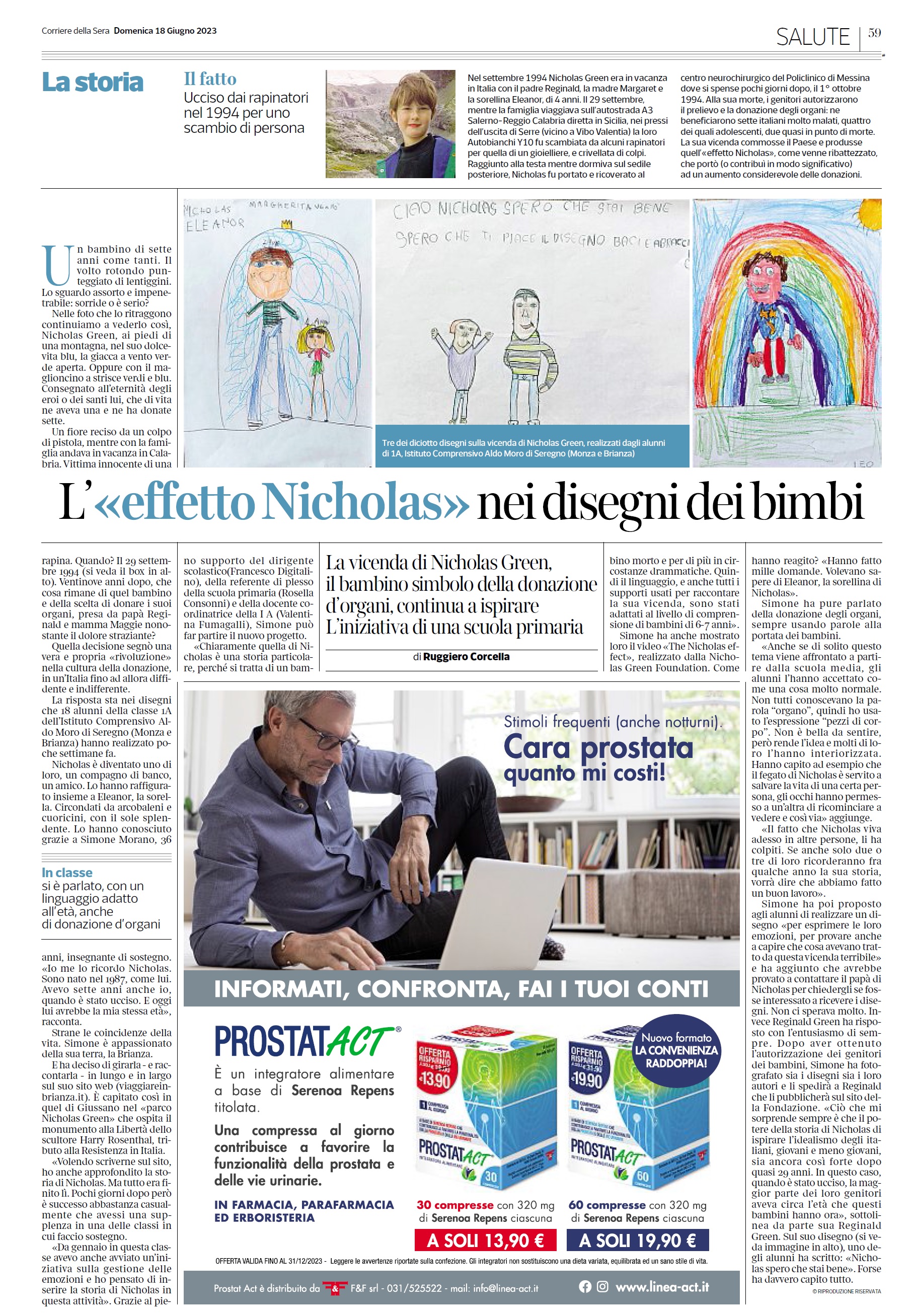
I sent the email to Ruggiero Corcella, senior editor at Corriere della Sera, Italy’s largest daily  newspaper, because of the powerful pieces he has written about organ donation. The result was this heart-warming article in the print edition of June 18:

Corriere della sera - June 18 2023

Translation:

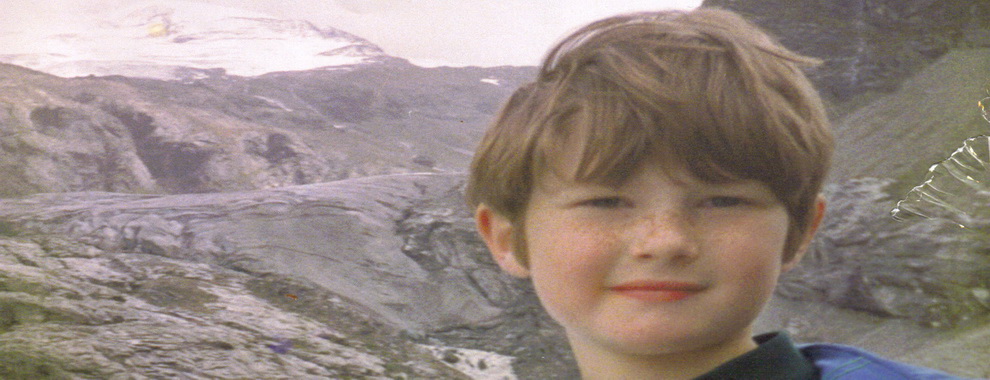
A seven-year-old boy like many others. The round face dotted with freckles. The absorbed and impenetrable gaze: is he smiling or is he serious? In the photos that portray him, we continue to see him, Nicholas Green, like that, at the foot of a mountain, in his blue turtleneck, the green windbreaker open. Or in a green and blue striped sweater. Passed down to the eternity of heroes or saints, he who had one life and donated seven. A flower cut by a shot from a gun, while he was on vacation in Calabria with his family. Innocent victim of a robbery.

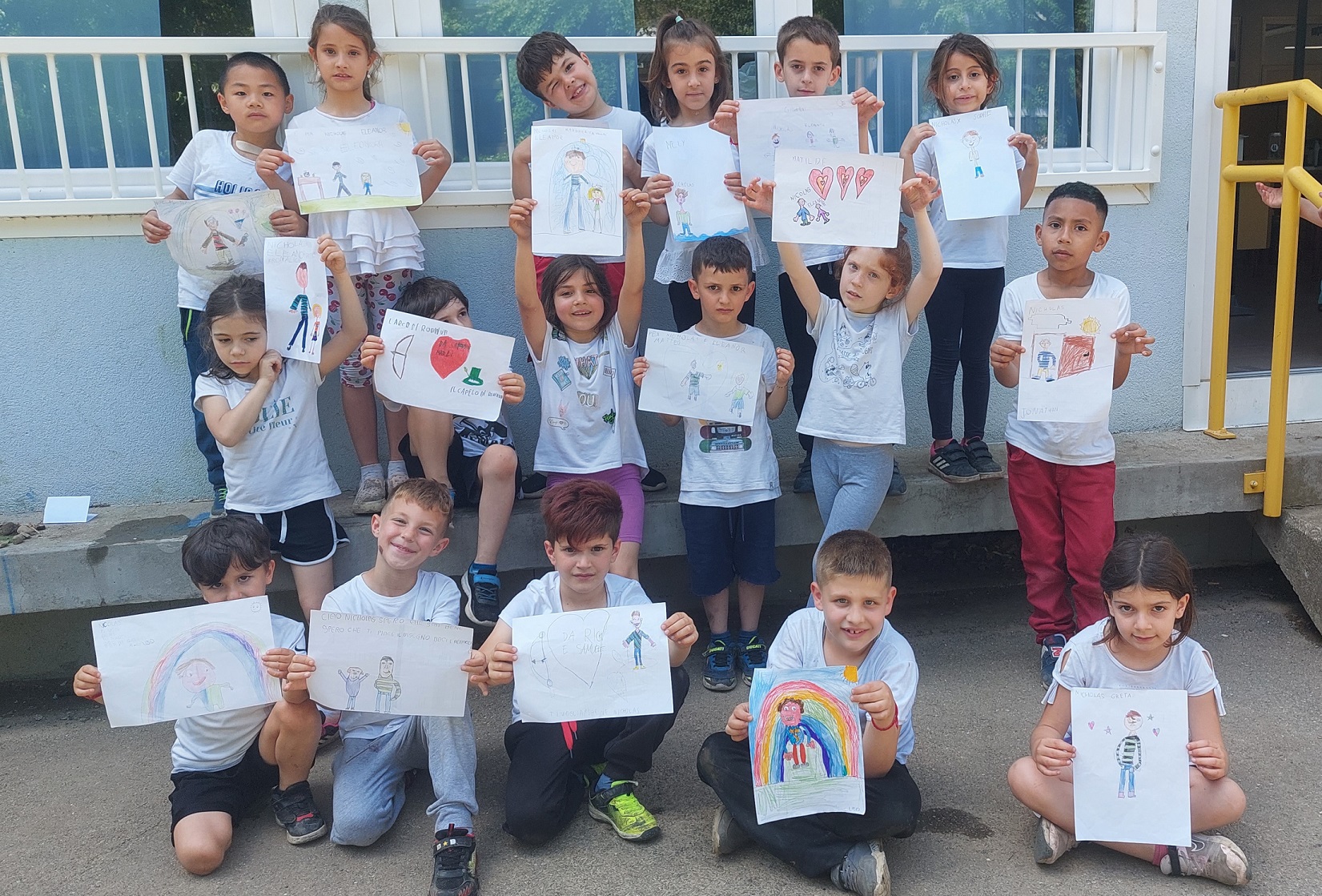
When? On September 29, 1994. Twenty-nine years later, what endures of that child and the choice to donate his own organs, made by his dad Reginald and his mom Maggie through excruciating pain? That decision marked a real “revolution” in the culture of giving, in an Italy until then suspicious and indifferent. The answer lies in the drawings that … pupils of class 1A of the Aldo Moro primary school of Seregno made a few weeks ago. Nicholas became one of them, a classmate, a friend. They depicted it together with Eleanor, his sister. Surrounded by rainbows and little hearts, with the shining sun. They came to know him thanks to Simone Morano, 36 years old, a teacher’s aid.

1A - 1ST GRADE - SEREGNO

The ‘1A’ 1st grade class of Seregno primary school

“I remember about Nicholas. I was born in 1987, like him. I was seven years old too, when he was killed. And today he would be my same age”, he says. Strange coincidences of life. Simone loves his part of Italy, Brianza, and he decided to travel to all of it – far and wide on his website (www.viaggiareinbrianza.it). He ended up in Giussano, in the “Nicholas Green Park” which hosts the ‘Monument to Freedom’ made by sculptor Harry Rosenthal, a tribute to the Resistance in Italy. “Wanting to write about it on the site, I also delved into the story of Nicholas. And that was all. A few days later, by accident it happened that I had a substitute teaching assignment in one of the classes where I assist. Last January, in this class I also started an initiative on the management of emotions and thought to insert the story of Nicholas in this activity”.

Thanks to the support of the school principal (Francesco Digitalino), the school complex manager for the primary school (Rosella Consonni) and the coordinator of the 1A class (Valentina Fumagalli), Simone was able to start the new project. “Clearly Nicholas’ is a special story because it talks of a child who died and moreover who did so under dramatic circumstances. So, the language and all the ways used to tell his story have been adapted to the level of understanding of 6-7 year-old children”. Simone also showed them the «The Nicholas effect» video made by the Nicholas Green Foundation.

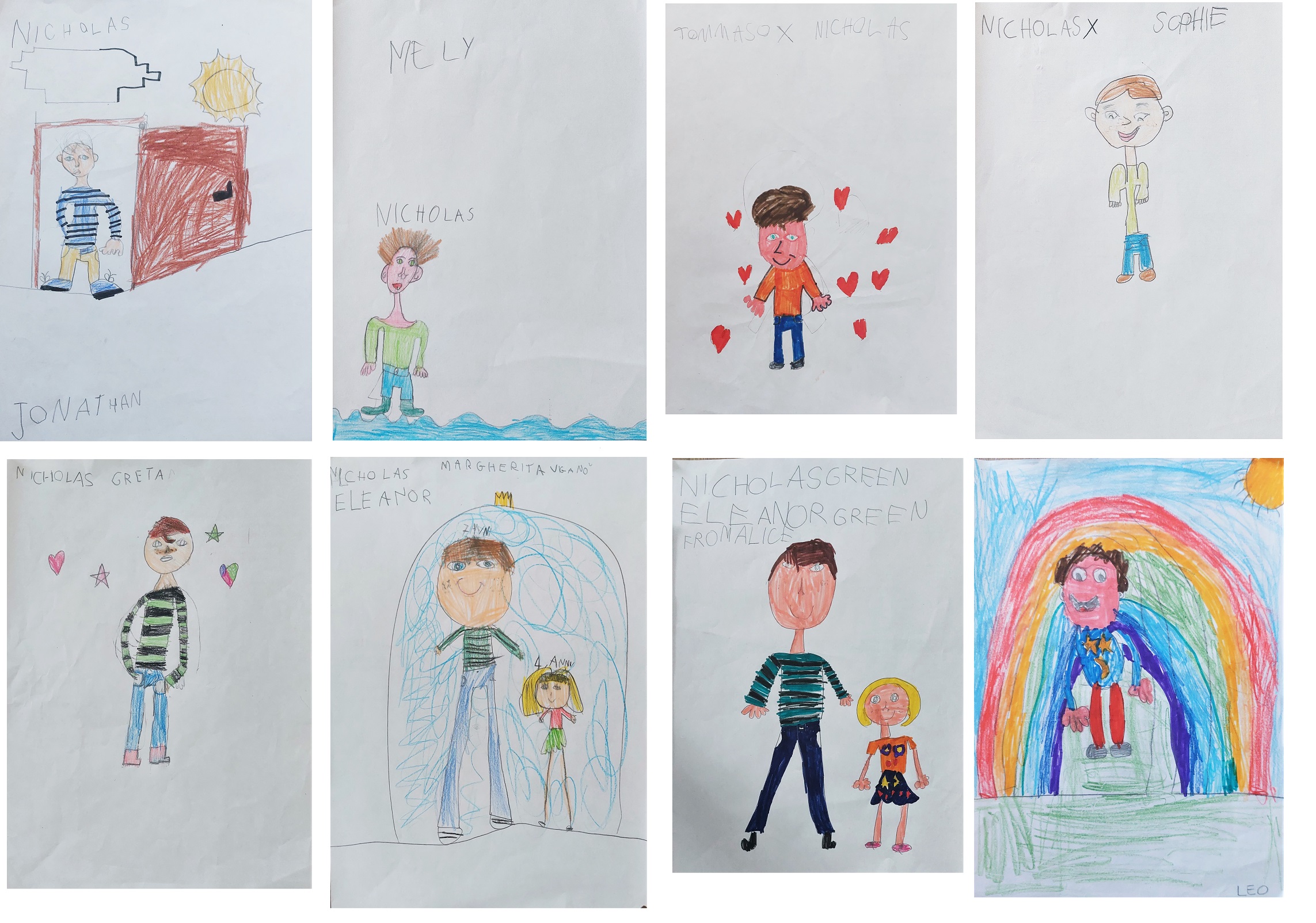
collage 1How did they react? “They asked a thousand questions. They wanted to know about Eleanor, the little sister of Nicholas.” Simone also spoke of organ donation, always using words suitable for children. “Although this topic (of organ donation) is approached with students from middle school, these pupils accepted it as a very normal thing. Not everyone knew the word “organ”, so I used the expression “parts of the body”. It is not a nice expression to hear, but it conveys the idea, and many children absorbed it. They understood, for example, that Nicholas’ liver saved the life of a certain person, his eyes allowed another person to start seeing again and so on» he adds. “The fact that Nicholas lives now in other people has affected them. If even only two or three of them will remember his story in a few years from now, it means that we did a good job”.

collage 2

Simone then suggested that his students should draw a picture “to express their emotions, and to try to understand what they had learnt from this terrible event” and he added that he wondered if he should contact Nicholas’ dad to ask him if he was interested in receiving the drawings. He did not have high hopes. Instead, Reginald Green replied with his usual enthusiasm. After obtaining permission from the parents of the children, Simone photographed both the drawings and their authors, and will send everything to Reginald to be published on the website of the Foundation. “What I always find surprising is that the power of Nicholas’ story to inspire the idealism of Italians, young and old, is still so strong after almost 29 years. In this case, when Nicholas was killed, most parents of these children were about the age these children are now,” Reginald Green emphasizes.

On his drawing, one of the pupils wrote: “Nicholas I hope you’re fine”. Perhaps he really understood everything.

Leave a comment

Filed under In the news, Italia, Italy, Nicholas' story

Laura, Nicholas Green’s sister’s wedding. An interview with his father, Reginald: “He continues to save lives today thanks to organ donation”

“Here is a slightly shortened version of an online article in Oggi, the most widely read of Italy’s weekly news magazines. (Reg Green)

Article by Deborah Ameri

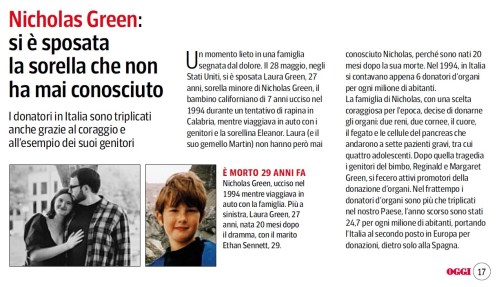
We interviewed the father of the American child who, almost 30 years ago, was murdered by two robbers and who, thanks to the gesture of his parents, has stimulated transplants in our country. His sister Laura, born twenty months after the tragedy, has just got married in Washington, remembers her little brother.

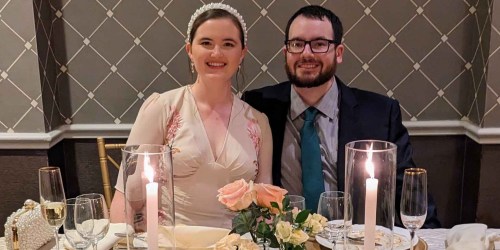
Laura and Ethan

Laura Green and Ethan Sennett wed in Alexandria, Virginia, USA

Reginald Green is 94 years old, an American, a former journalist and writer. He has a wife, Maggie, 30 years his junior, three children, Eleanor, Laura and Martin. And a fourth, killed in 1994, who was only 7 years old, by two robbers on the Salerno-Reggio Calabria motorway, during a vacation in Italy.
That child was Nicholas Green, who donated his organs to seven seriously ill people when he died: a gesture that at the time seemed revolutionary, even incomprehensible. This is why the story of the Greens is known all over the world.
Almost 30 years have passed since Nicholas’ death but he continues to save lives, Reg tells us, connected via Zoom from Alexandria, near Washington, where Laura got married yesterday. She was born twenty months after the tragedy (together with her twin Martin).

Mr. Green, Since that day you have been committed to promoting the culture of organ donation. And it continues to this day. Why?

“After my son’s death there was what was then called the Nicholas Effect. Organ donations in Italy tripled in a few years bringing it to the top places for transplants in Europe and in the world, while before it was at the bottom [in Europe.] Nicholas saved not only the original seven recipients, but thousands of lives and continues to do so in death, also thanks to the book I wrote and the film, Nicholas’ Gift which was based on it, seen by a hundred million people”.

Did you ever think about it before that tragic day?
“No, Maggie and I never talked about it. But when we saw him on the last day, we knew we couldn’t bring him back. He no longer needed those organs.”

Was it a hard-fought decision?
“No. The doctors told us he was brain dead. We asked several times, are you sure? My wife and I sat holding hands in silence. Then Maggie said: ‘He’s gone. We should donate organs.’ And for the first time in that hopeless situation, I saw a glimmer of positivity.”

Laura and Martin were born almost two years after the tragedy. When did you tell them about their little brother?
“As soon as they were old enough to understand we always talked about Nicholas. Not in a forced way, but in conversations……. ; They have never been frightened by his death.’

Laura, 27, has just gotten married to Ethan Sennett. Was Nicholas remembered at the ceremony?
“Yes, I mentioned it in my speech. It wouldn’t have been a family celebration without him, who was there in spirit. Eleanor, my daughter who was in the car with us at the time of the tragedy, was married at the Bell Tower (a memorial to the slain child, made up of 140 bells in Bodega Bay, California, ed ), because she wanted to have her brother at her wedding. Incidentally, Eleanor is pregnant and my fifth grandchild will be born in September.’

OGGI article in the print edition

OGGI article in the print edition (June 2023)

You have often returned to Italy. Don’t you feel resentment towards our country?
“….. I have come fifty times. And no, we feel no resentment. It could have happened anywhere. All the people we met would have done anything to save Nicholas and to prevent the tragedy”.

Has there ever been anything in these years that made you angry?
“You are the kindest people in the world. Wherever I go, I get warmth and understanding, everyone knows our son. Nicholas has millions of uncles and aunts in Italy. I know that even in schools they talk about him. It was not Italy that fired the gun, but two criminals”.

Have you ever met the people who received your son’s organs?
“Certainly. Last October I saw Francesco Mondello and Domenica Galletta who received corneas. I am in contact with Maria Pia Pedalà who received his liver. Today you could not tell that she has been ill. Her firstborn is called Nicholas.”

In Italy there are more than one hundred and twenty places with the name of Nicholas: streets, parks, squares, schools. Why did your story touch people’s hearts so much?
“Our son was not just an innocent child killed for no reason. He is something bigger. The symbol of organ donation, but also the symbol of giving. And the demonstration that, even in a terrible situation, something good can be done”.

Nicholas saved so many lives. Does that ease his pain at least a little?
“I think of him every day, but knowing that even in death he continues to help others is a great consolation to me”.

Deborah Ameri

Link to the original article online:

https://www.oggi.it/attualita/notizie/2023/05/29/laura-il-matrimonio-della-sorella-di-nicholas-green-lintervista-a-papa-reginald-continua-a-salvare-vite-ancora-oggi-grazie-alla-donazione-degli-organi/ 


1 Comment

Filed under Events, In the news, Nicholas' story

Stairway of Lawfulness

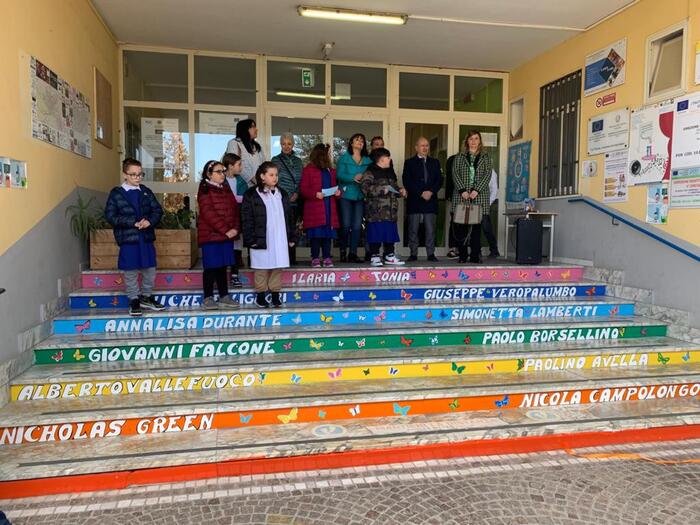
A primary school in Acerra, Italy, near Naples, has written, in large letters and on a background of bold colors, the names of victims of the Mafia on its front steps — including judges who knowingly put their lives at risk — so that every day the students will be forcibly reminded of the importance of combating lawlessness with justice.

On the first step, among all the Italian names, one is American: Nicholas Green. 

Stairway - Italian school

Photo by ‘Ansa’ press agency, Italy

Link to Ansa article: https://www.ansa.it/campania/notizie/comune_di_acerra/2023/03/21/inaugurata-scala-legalita-al-iv-circolo-didattico_605bddc1-da82-4502-b9d0-0b816b23ab6e.html

Leave a comment

Filed under Events, In the news, Italia, Italy, Nicholas' story

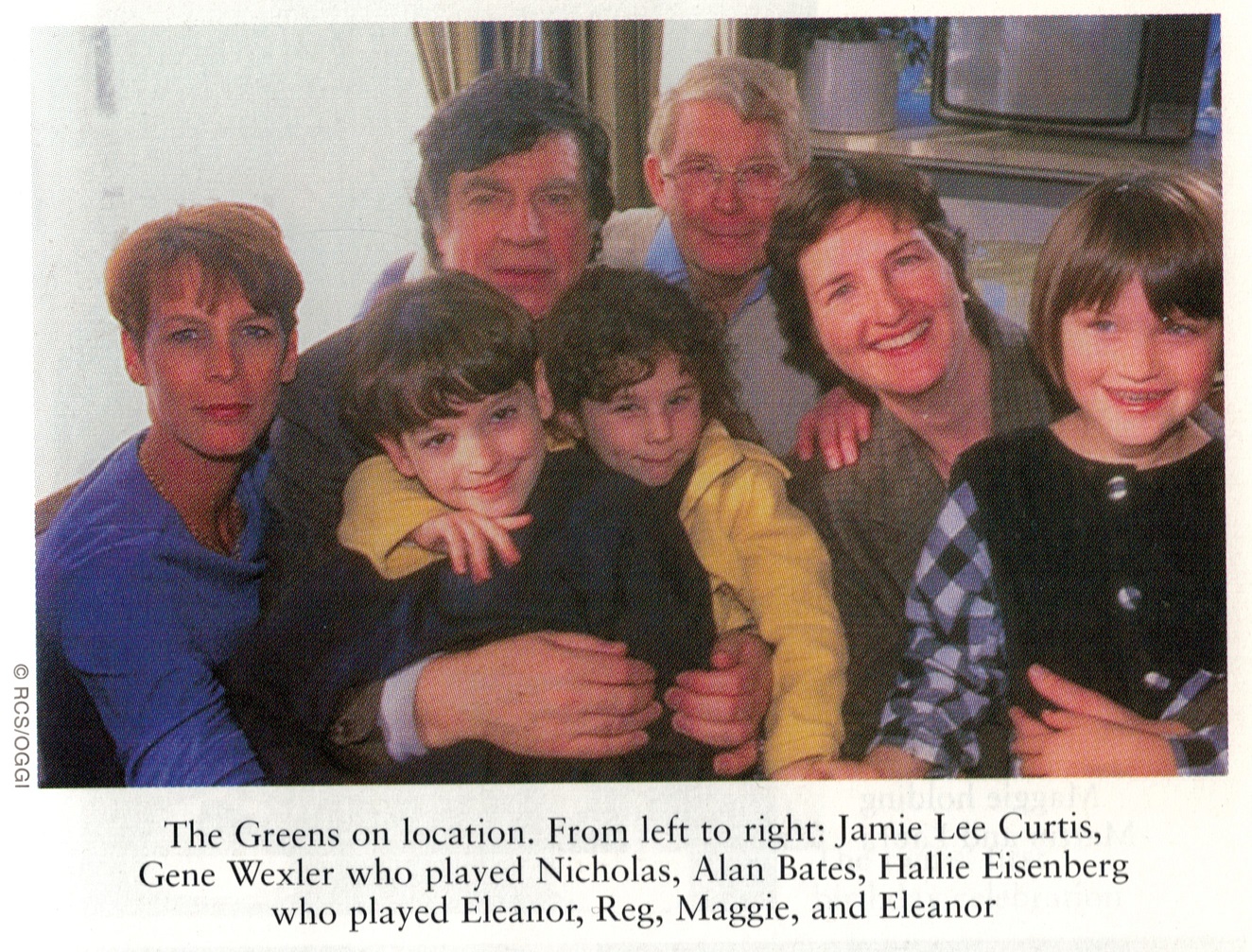
Jamie Lee Curtis, The Actress Who Was My Wife

Regular readers will understand the special pleasure my wife, Maggie, and I took in the Oscar awarded to Jamie Lee Curtis for best supporting actress.

We became close to her when she played Maggie in the television movie, Nicholas’ Gift, based on the shooting of our seven-year-old son, Nicholas, in a case of mistaken identity while we were with him and his sister, Eleanor, on a family holiday in Italy.

JLC Oscar award - L.A. Times

Jamie Lee Curtis shows her Oscar (Photo by L.A. Times)

The gift of submerging her own (strong) personality into that of the character she is playing — the same gift that earned her the Oscar — was evident from the moment we met. Her very first words to Maggie were, “I hope I won’t let you down.”

And so she worked her way in the movie in stages from the horrifying realization that Nicholas had been struck in the head by a bullet, through the profound grief of a mother losing her precious son to the graceful recognition that out of his death donating his organs could save the lives of some desperately sick people, whom at that moment no one else in the world could help.

movie GreensOnLocation

It didn’t seem like acting at all but, instead, the reliving of a journey from despair to hope — a hope not just for Nicholas’ seven recipients but for the whole world.
Congratulations, dear lady.

By Reg Green

Nicholas’ Gift has been seen by more than 80 million people worldwide and can be rented online.

Note: This article first appeared in Colorado Boulevard magazine, Pasadena, California. Link: https://www.coloradoboulevard.net/jamie-lee-curtis-the-actress-who-was-my-wife/

Leave a comment

Filed under Jamie Lee Curtis, Nicholas' Gift movie, Nicholas' story, The Nicholas Effect

Maria Pia, Dying at 19, Is Now a Radiant 47-Year Old

She is 47, lives in Sicily and likes true stories with happy endings. That’s understandable. She was on her deathbed when she was 19.

Her name is Maria Pia Pedala and she was saved from a seemingly inevitable death by a liver transplant. When I met her a few months later she already looked full of good health. Her way back continued so well that in two years she married her loyal sweetheart, Salvatore, and four years after the transplant had a baby boy and two years after that a girl, two whole lives that would never have been.

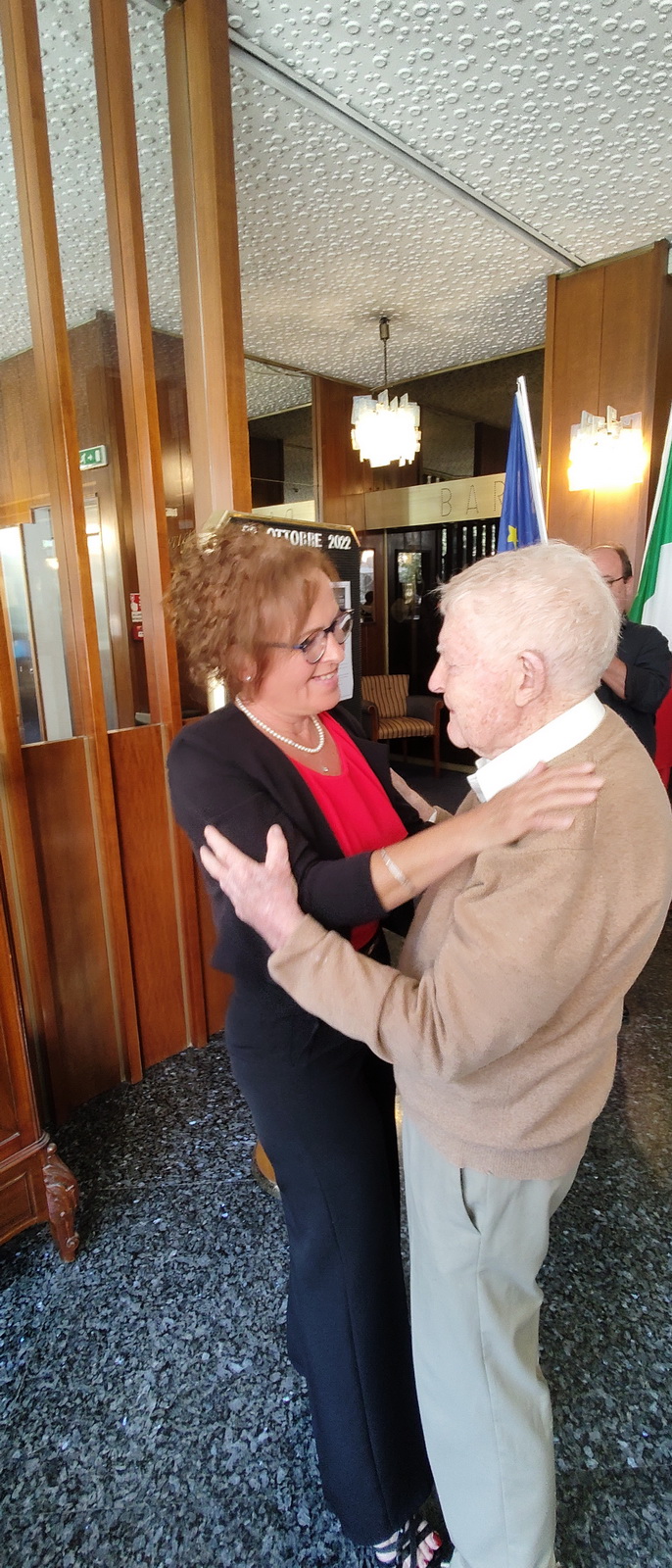
Maria Pia Pedalà and Reg Green

Maria Pia Pedalà and Reg Green at Donarte Conference, October 2022. Photo by Andrea Scarabelli

     All this was a long time ago — she received her new liver in 1994 — but recently, back in Sicily for a few days, I chatted with her just before she gave a speech promoting organ donation at Donarte 2022, an international conference on transplantation at the University of Messina, and I could see in her the prototype of a busy matronly housewife, who gets up by 5.30 am daily, keeps the house clean and tidy, gardens, cooks and deals with all the other needs of a loving family.

She watches her health carefully, goes to bed early, eats sensibly and takes her medications meticulously, feeling she has an obligation to both the healthcare staff who have kept watch over her from her teenage to middle years and to the family who saved her life.

The result is she can do everything normal people of her age can do and in a line-up no one would pick her out as the one who had been the sickest. She also finds a preciousness in the small things in life that eludes most people.

Transplantation is a medical miracle and, even though it is an everyday procedure in hospitals all over the world, it doesn’t stop being a miracle that physicians can take a body part of someone who has died, put it into the body of someone who is dying and bring out of it a healthy person.

In this case, for my family, the story has an element in it that takes it to a higher level still: our son was her donor.

Author:  Reg Green

Leave a comment

Filed under Events, Italia, Italy, Nicholas' story

Organ Donation Group Comforts Families Who Didn’t Donate 

The Aido division for the Province of Alessandria (a volunteer group in the Piedmont region of Northern Italy, alessandria.provincia@aido.it) and the Alessandria hospital will soon start a new service that they have called the “Nicholas’ room” (named for ‘our’ Nicholas) to denote an environment of serenity to give psychological support not just to the families of organ donors but also to those who decided not to donate. “These people do not deserve to be judged, but must be supported and helped,” the group’s president, Nadia Biancato, said.

“That ‘no’ said in a dramatic moment can lead to beautiful unselfish deeds in the future.” It can also stimulate them to talk of their experience so that others might make different decisions about organ donation, she added.

Aido Alessandria - Nicholas' room

The introduction of “Nicholas’ room” project

The plan is to extend the project to all other areas of Piedmont. The City of Health hospital in Turin, Piedmont’s capital, already runs a similar project for donor families and has been very pleased with the results but the Alessandria version is the first in Italy to include non-donors.
Here are two links to local news sources (in Italian):

https://radiogold.it/cronaca/315900-alessandria-sostegno-psicologico-famiglie-donazione-organi/

https://www.ilpiccolo.net/generic/2022/06/08/video/nicholas-green-e-la-casa-che-da-supporto-psicologico-140764/

Leave a comment

Filed under Events, Italia, Italy, Nicholas' story, Places named for Nicholas, Useful tools

“For 27 years, organ donation has been boosted by ‘the Nicholas effect'”

By Diane Daniel, American Heart Association News

Link to the article, AHA website: https://www.heart.org/en/news/2022/04/19/for-27-years-organ-donation-has-been-boosted-by-the-nicholas-effect


     Nicholas Green should’ve turned 35 this year.

Instead, a random act of violence claimed his life while he was on vacation with his family in Italy more than 27 years ago. The story captivated a worldwide audience. So did what happened next.

Nicholas’ organs and corneas were donated to seven people. His heart went to a 15-year-old boy and one of his corneas to a mother who’d struggled to see her baby.

Recognizing the opportunity to turn his family’s tragedy into a blessing for others, Reg Green, Nicholas’ father, began a quest that has changed countless lives. It’s been the source of a TV movie, the inspiration for a bell tower in California and the impetus for a campaign in Italy that could help connect more recipients with the families of their donor.

Now 93, Reg lives in La Cañada Flintridge, California, outside of Los Angeles. Although injuries have recently kept him from what used to be a daily hike in the foothills near his home, he can be found every day answering emails, making calls or writing articles in hopes of saving and improving lives via what the Italian media dubbed “the Nicholas effect.”

“It’s amazed me that it’s touched so many different people and has lasted all these years,” Reg said. “It’s a bigger thing than I could have possibly imagined.”
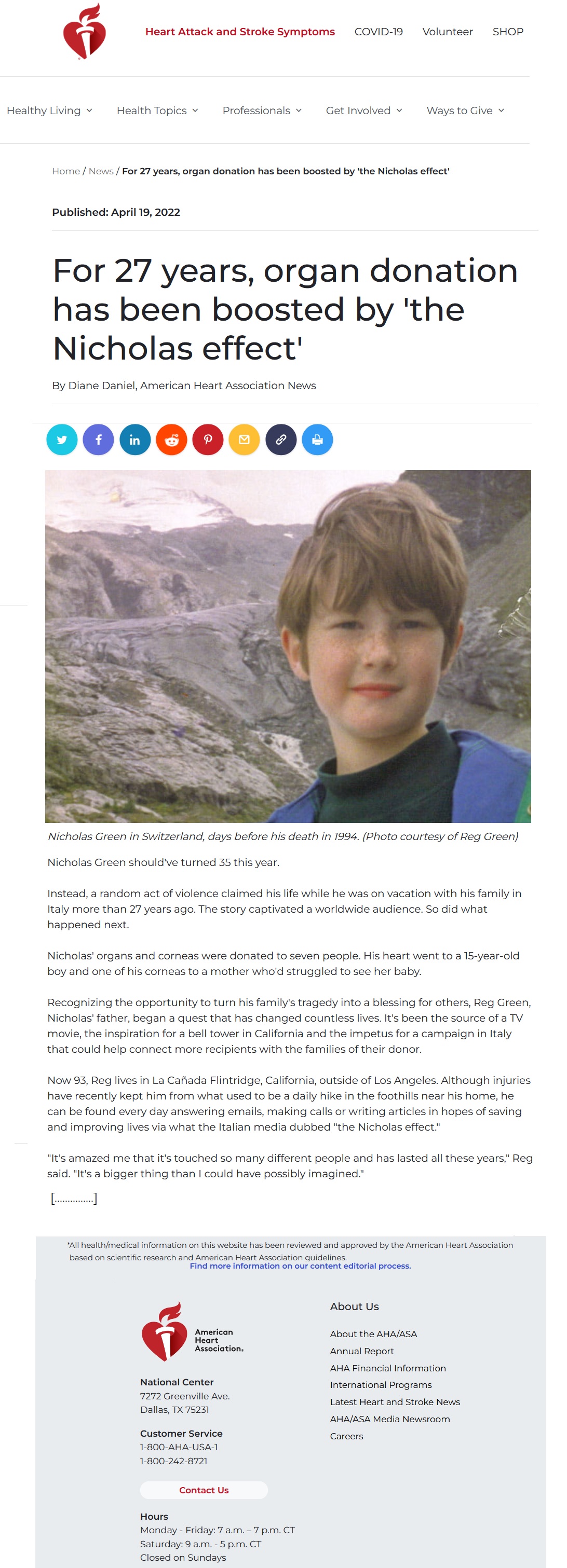
AHA ARTICLE April 2022

Screenshot of AHA article

The story begins in September 1994, when Reg and Maggie Green were driving on a highway in Italy. Their children, 7-year-old Nicholas and 4-year-old Eleanor, were asleep in the back seat of the family’s rental car.

Thieves thought their car was carrying jewels. They shot through the back window. Only one bullet hit any of them. It lodged at the base of Nicholas’ brain.

Over the next two days, doctors at a hospital in Sicily tried saving the boy. Meanwhile, the sensational story – a young American shot by highway robbers in Italy because of a case of mistaken identity – rapidly generated headlines throughout the country and beyond.

When doctors declared Nicholas brain-dead, Italians poured out their grief, from people on the street to the prime minister.

Maggie and Reg decided to donate Nicholas’ organs and corneas. They went to four teenagers and three adults.

If one little body could do all that, Reg thought, imagine how many could be helped if more people became organ donors?

“I knew we’d been handed an opportunity,” said Reg, who had earlier worked as a journalist in London and was then writing a financial newsletter. “I saw this as the biggest news story of my life. We had the chance to change the direction of organ donation.”

Back home in California’s Bay Area, Reg and Maggie established The Nicholas Green Foundation to support organ and tissue donation worldwide.

In Italy, the impact “was almost instantaneous,” Reg said. “Donation rates went up 30% in the fourth quarter of 1994 and rose every year for the next 10 years until they were triple what they had been before he was killed.”

Reg was soon giving interviews and publishing opinion articles in countries as diverse as India, Australia and Venezuela. He and Maggie started traveling anywhere they were invited to promote their cause. (Maggie stopped traveling as much in 1996, when she and Reg had twins, Laura and Martin.)

“People around the world were realizing, some for the first time, the power of organ donation,” Reg said.

The momentum took many forms.

In 1995, sculptor Bruce Hasson volunteered to build a bell tower dedicated to children who have died. Italians donated more than 140 bells, with the centerpiece blessed by Pope John Paul II. (In 2018, Nicolas’ sister Eleanor was married at the site of the sculpture.)

In 1998, the TV movie “Nicholas’ Gift” aired, starring Jamie Lee Curtis. Earlier this year, Curtis posted on social media a remembrance of “the privilege of portraying Maggie Green” and cited the Nicholas effect. She called organ donation “honoring, humbling and haunting.”

In the early days of the nonprofit, Reg received a letter from a 21-year-old university student in Rome named Andrea Scarabelli. He wanted to help.

Scarabelli began translating articles published in Italy into English for the Greens. He later translated Reg’s books, articles and speeches into Italian and even arranged media tours all over Italy.

“Reg and Maggie really changed the attitude of a nation,” Scarabelli said. “Now organ donation is seen as a normal thing in Italy.”

When Nicholas’ organs were donated, the Greens were tremendously moved by getting to meet the recipients. One recipient was a 19-year-old woman who nearly died the same night as the boy; she’s now the mother of two, including a boy she named Nicholas.

However, laws in Italy changed, no longer facilitating contact between organ recipients and their donor’s family. Starting in 2016, Reg and Scarabelli began pushing to give donors and recipients opportunities to meet. A bill to that effect has been introduced by a group of legislators.

Maggie praised her husband’s tireless efforts.

“I’m a willing participant, but he’s always been the engine,” she said.

Maggie said that while her family has celebrated the life and grieved the death of Nicholas with the world, they have their private remembrances as well.

“People outside the family remember the day he died,” she said. “We remember his birthday.”
 

1 Comment

Filed under American Heart Association (AHA), In the news, Nicholas' story, Useful tools

The letter from the father of Nicholas Green: “My battle to allow contacts between the two sides in organ donation”

(Article by Reg Green published in ‘La Repubblica’, an Italian national newspaper. March 3, 2022)

When Dan and Shirley Mason. an American couple, met Inger Jessen, who when 55 years old had received the heart of their 18-year old daughter, Nicole, it was one of the most meaningful events of their lives. They all hugged, cried with joy and exchanged stories. They have become close friends.

The dramatic culmination of their first meeting was when the Masons heard through a stethoscope the steady beat of their daughter’s heart. “I couldn’t believe it,” Dan said later.  “Since Nikki was killed in a car accident twenty years ago, I think of her every day. She seems so far away. But here she was again.” Inger too was profoundly moved. “Since then,” she says, “I have felt a peace I haven’t known in years.”

     As the father of Nicholas Green, the seven-year old California boy who was shot in an attempted robbery on the Salerno to Reggio Calabria autostrada and whose organs and corneas my wife, Maggie, and I donated to seven very sick Italians, I share their view: the bonds we have forged with those seven have had a healing effect on all of us.

     On our side, we have been gratified to see how our son’s organs have transformed life for people who were once on the brink of death. To give just one example: Maria Pia Pedalà, the 19-year old Sicilian who received Nicholas’ liver had a baby four years after the transplant — an impossible happening beforehand. She called the baby Nicholas and in a family with a history of liver disease he is fit enough to have become a non-commissioned officer in the navy.

    On their side, the recipients can see we don’t hold it against them that they are living only because our son died — and that has freed them from the sense of guilt that many recipients carry with them for the rest their lives. Twenty-seven years after the transplants, five of the seven are still alive.

   But communication between organ donor families and their recipients is almost impossible in Italy under a law (91/99) that was passed more than twenty years ago because lawmakers feared that any contact, even if both sides want it, risks psychological damage. Even anonymous letters are forbidden!

     In the United States, however, tens of thousands of families have either met face to face or have written to each other and in the overwhelming majority of cases the happiness and health of both sides have improved. In fact every one of the 58 organ procurement organizations in the United States, that under the Department of Health look after both donors and recipients, encourages contact.

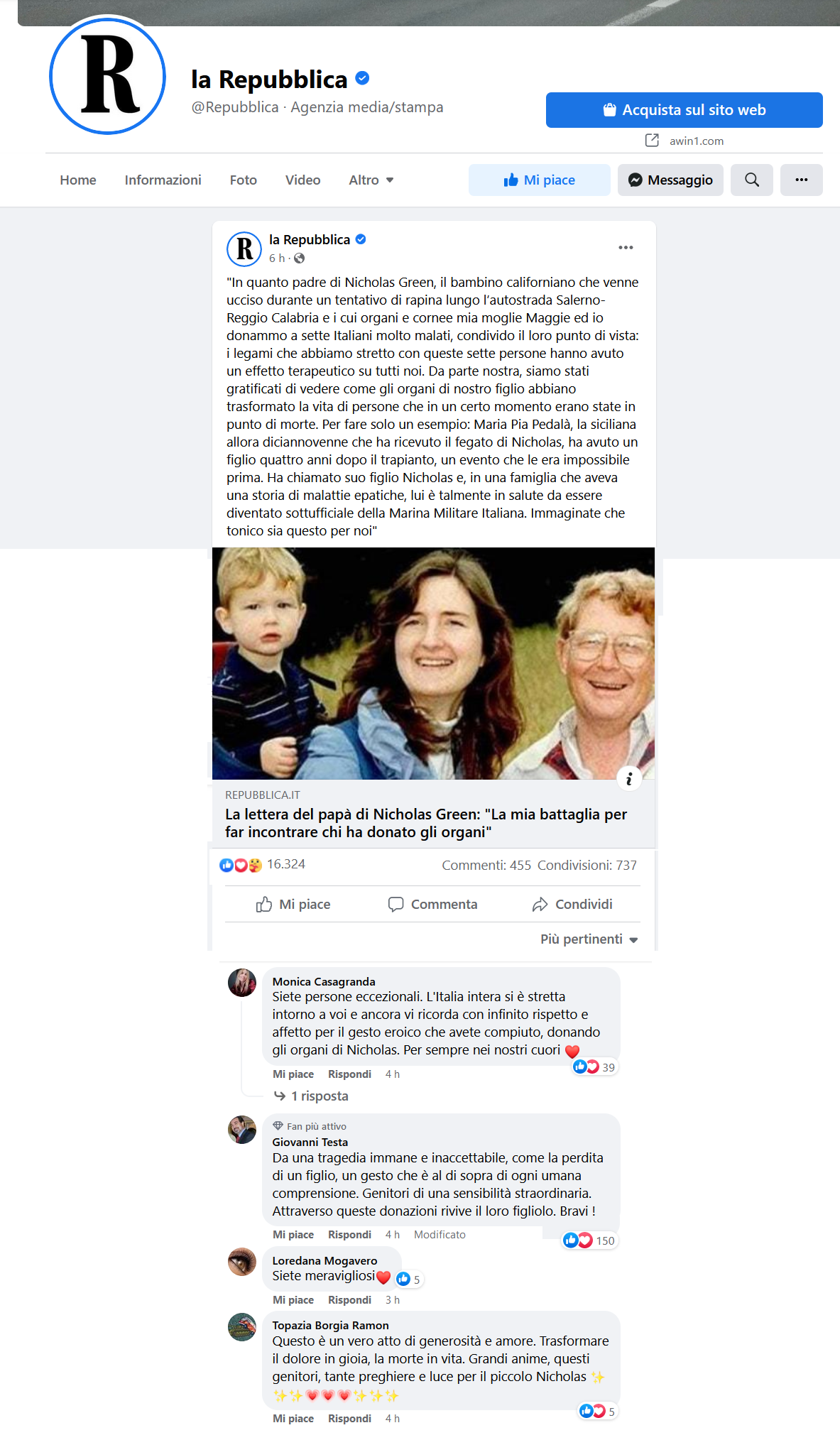
La Repubblica Facebook post - March 12 2022

The article had more than 16,000 likes on the Facebook page of the newspaper

     Of course, these contacts are planned in conjunction with the families’ medical advisers: finding each other through the Internet, as some Italian families do, is asking for trouble. Contact usually begins when one side writes anonymously to their transplant team, who scrutinize it to make sure there is no sign of risk, such as an overwrought family or one likely to make emotional demands on the other side. If the family receiving the letter does not want to write back, communication stops cold. If they want to reply, however, they do so, also anonymously, and the first family also has the option of continuing or breaking off the conversation there and then. After a while, however, both sides can reveal their identity if they wish and share their experiences as many thousands have.

     The result of all this care is that none of the morbid forecasts of things going wrong has happened on any scale. For example, I couldn’t uncover one case in America of a donor asking a recipient for money. Instead, imagine the thrill we had when a cousin of the 15-year old who received Nicholas’ heart told us that after the transplant he said to everyone he met, “I used to have a worn-out old jalopy for a heart. Now I have a Ferrari.”

     To this day in Italy when those who oppose liberalization are asked for proof of any significant numbers of things going wrong they are unable to provide them. Can things go wrong? Of course. But the thousands and thousands of medically documented cases where things went well in the US are evidence that the problems are extremely rare. I challenge opponents of change to show any statistics of problems.

     Despite all this, when I, with just one helper, Andrea Scarabelli in Rome, started a campaign in 2016 to liberalize contacts between the two sides in Italy we were so alone that we became known as Don Quixote and Sancho Panza. But we sent the evidence we collected to every national organization involved in transplantation and, after studying it, all of them — the National Transplantation Center, the National Bioethics Committee and the National Institute of Health — have come out in favor of contact when it is done under authorized medical supervision and when both sides have clearly expressed a desire for it. Dr Pierpaolo Sileri, Deputy Minister of Health, has said firmly, “La liberalizzazione dei contatti tra riceventi e donatori è un gesto di umanità e civiltà, un atto doveroso”. I hope readers of this article will support the legislation that has been introduced to allow that to happen and relieve a lot of unhappiness in families who have performed one of the most selfless acts our society knows.

(Link to the article in Italian: https://www.repubblica.it/cronaca/2022/03/03/news/la_lettera_del_papa_di_nicholas_green_la_mia_battaglia_per_far_incontrare_chi_ha_donato_gli_organi-340120452/)

Author: Reg Green.

Leave a comment

Filed under In the news, Italia, Italy, Nicholas' story, Stories, Useful tools

Their Favorite Murder

Would you believe it? There’s a podcast called “My Favorite Murder” — and it is the sixth most-listened to podcast out of the thousands available. It focuses on true crime stories and the title, of course, is a way to catch attention: it evidently succeeds because Wikipedia estimates that last year it had 25 million downloads a month!

Recently they did a 13-minute segment on the killing of Nicholas and, despite the show’s title, they dealt with it responsibly and, except for some details, accurately.

screenshot podcast nicholas

They even asked listeners who had an interesting organ donation story to tell to contact them at myfavoritemurder@gmail.com. Write to them if you have such a story. If they use it you will have a huge audience, most of whom have never thought seriously about organ donation.

Here is the link:  https://myfavoritemurder.com/318-one-spiritual-moment/. Our story begins at the 17th minute (I’d skip the chit chat that goes on until then) and ends at the 30th.

Reg Green

Leave a comment

Filed under In the news, Nicholas' story, Stories